Ever found yourself staring at limp, crisp-edged leaves and wondering what went wrong? You might mist and water, but your tropical plants just keep showing signs of stress. It’s not just you—many plant lovers struggle with this invisible enemy: dry indoor air.
When humidity misses the mark, jungle plants can’t soak up life as they do in the wild. If you’ve felt frustrated—watching brown tips appear despite your care—know this: you’re definitely not alone. Low humidity is sneaky and can slowly sap the energy from your Monstera, Fern, or Calathea, leaving them a shadow of what they could be.
By the time you finish reading, you’ll have practical know-how to create the perfect humidity for tropical plants and truly transform their daily health. Ready to see how lush your home jungle can get? Let’s take a closer look at what really changes their world.
Why Humidity Matters For Tropical Plants
If you’ve ever wondered why your Calathea curls up or your fern seems to droop overnight, you’re definitely not alone. Humidity isn’t just a background detail for tropical plants — it’s front and center for their survival. Unlike desert or temperate species, these beauties evolved under the dense canopies of rainforests, where air can be sticky and moisture clings to every leaf.
The truth is: low humidity silently sabotages plant health. Instead of lush, glossy leaves, you’ll get brown tips, crispy edges, and stunted growth. According to research published by the Royal Horticultural Society, most tropical houseplants need air humidity in the 50–80% range to thrive. Your home’s typical indoor air? It often dips to 30% or less, especially in heated or air-conditioned spaces.
💡 Pro Tip: Use a hygrometer to monitor humidity around your plants, not just the room overall. The American Society for Horticultural Science recommends this for more accurate readings where it matters — right at leaf level.
So why is humidity so crucial? It’s all about the plant’s natural water cycle. When air is dry, moisture evaporates much faster from leaves. The plant tries to draw up more water from the soil, but it can’t keep up — and that’s when stress shows.
Picture this scenario:
It’s winter. Your apartment’s heater is humming. You water your Monstera on schedule, but its leaves develop brown patches, fast. The problem isn’t the watering — it’s the bone-dry air, pulling moisture out before roots can replenish it. A quick fix (like clustering plants to create a microclimate or misting them lightly) can make your living room feel a little more like a rainforest floor.
| Environment | Typical Humidity (%) | Plant Response |
|---|---|---|
| Rainforest | 70–90 | Optimal growth, large glossy leaves |
| Average Home | 30–40 | Brown leaf tips, leaf drop |
| Heated Room (Winter) | 20–30 | Crispy edges, stress, slow growth |
And here’s what most owners overlook: humidity isn’t the same as watering. Soil can be damp, but without moist air, many tropicals can’t absorb enough water through their leaves and stems. There’s one practical sign most people miss until damage appears…
Common Signs Your Plants Need More Moisture
Have you noticed your tropical plants looking a bit lackluster, but you’re not sure what’s wrong? You might think it’s a pest problem or nutrients — but sometimes, it’s plain old dry air. Recognizing what low humidity actually looks like could spare you a world of headaches, and a few crispy leaves.
Some symptoms sneak up on you. Others hit fast, especially when the seasons change. Here’s the thing: most tropical plants act like early warning systems. When they’re thirsty for moisture in the air — not just in the soil — they start signaling trouble in telltale ways you can spot with just a glance.
- Browning leaf edges: You’ll see brown or yellow tips first, especially on species like Calathea or Maranta.
- Leaf curling or folding: Plants like ferns literally curl in on themselves to conserve moisture when air is dry.
- Wilting or drooping leaves: Not always a watering issue! Low humidity makes leaves go limp even when roots are damp.
- Stunted growth and faded color: When there’s not enough moisture, new leaves emerge smaller and lose their vibrant greens.
- Leaf drop: Frustrating, right? Some tropicals will drop lower leaves as a natural self-defense mechanism.
💡 Pro Tip: If you consistently see multiple signs — like both crispy tips and leaf curls — check the humidity in your room before turning to complex fixes. According to the University of Florida IFAS Extension, humidity below 40% is a major culprit for indoor plant problems, even when watering is attentive.
In practice:
Picture this scenario: Your parlor palm looks healthy at the store, but two weeks after coming home, the tips turn brown and yellow. You water more, nothing changes. Only after putting a basic humidity gauge nearby do you realize your room’s at 28%. A small humidifier or pebble tray shifts the look in days — leaves uncurl, and new shoots appear with no brown at the edges. Relief!
| Sign | Likely Cause | Action |
|---|---|---|
| Brown Tips/Edges | Low Humidity | Increase ambient moisture |
| Leaf Curl | Air too dry | Add misting or group plants |
| Leaf Drop | Humidity < 40% | Move away from heaters |
What actually works might surprise you — some fixes are simpler (and faster) than you’d ever guess…
Quick Ways To Boost Humidity Indoors
Chasing the lush, thriving look of a real jungle indoors? When air dries out, your tropical plants won’t wait for slow fixes. The good news: increasing humidity is easier and quicker than you’d expect — no special degree required!
- Group your plants together. Plants naturally release moisture through transpiration, raising the humidity in their cluster. Place them close, but give each pot breathing room to prevent mold.
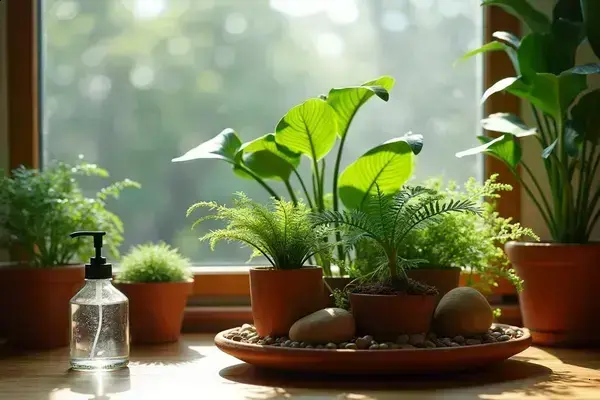
- Set up pebble trays. Fill a shallow tray with stones, add water just below the top, and stand pots above the water line. As the water evaporates, it boosts moisture right where your plants need it.
- Use a room humidifier. Invest in a quality portable humidifier (look for models by Levoit or Honeywell). Ultrasonic models are quiet, energy-efficient, and deliver consistent results. Place it near, but not blasting directly onto, your plants for optimal effect.
- Mist, but do it smartly. Lightly mist leaves with distilled or filtered water—hard tap water can leave lime spots. Best done in the morning so leaves dry by night, avoiding fungal risk.
- Dry laundry indoors. Hang wet clothes or towels in the same room as your plants. It’s a surprisingly effective (and free) way to increase ambient humidity, especially in winter.
- Bonus: Move plants away from direct heater or air conditioner vents, since constant airflow evaporates moisture faster than you can replace it.
⚠️ Important Warning: Too much humidity can cause root rot and fungus — aim for balance. The Chicago Botanic Garden recommends keeping household humidity between 50–60% for most tropical species. Use a digital hygrometer for easy, precise monitoring.
In practice:
Imagine your living room over winter: palm leaves looking faded, despite your watering routine. You add a pebble tray and mist twice a week. Within days, the air feels fresher and the leaves perk up — not perfectly, but enough to see you’re on the right path. No fancy gardening gadgets, just simple tweaks that make a real change.
But there’s one detail most owners completely overlook until it’s too late…
Choosing The Right Tools For Humidity Control
Which humidity tool actually works for tropical plants indoors? With shelves packed full of gadgets—digital meters, pebble trays, ultrasonic humidifiers—how do you decide what’s essential and what’s just hype?
Let’s break it down with real-world context, not empty promises. Your choice depends on your goals, routine, and even your climate. Humidity control isn’t one-size-fits-all; instead, match your method to your lifestyle (and your budget) for the best results.
| Tool | Best For | Pros/Cons |
|---|---|---|
| Digital Hygrometer | Monitoring real humidity | Accurate & affordable / Needs battery |
| Room Humidifier (LEVOIT, Honeywell) | Raising humidity for many plants | Fast & effective / Needs cleaning & space |
| Pebble Tray | Small spaces, single plants | Simple DIY / Limited impact |
- Digital Hygrometer: This is your first line of defense. A reliable hygrometer reads actual air moisture near your plants, helping you avoid wild guessing. It’s recommended by the Missouri Botanical Garden as the single most useful monitoring tool for indoor gardeners.
- Humidifier: If you keep more than 2-3 tropical plants, a quality humidifier is a game changer. Look for features like auto-shutoff, variable output, and easy-to-clean tanks. Brands like LEVOIT and Honeywell offer models designed for small and medium rooms, with ultrasonic versions being especially silent and energy efficient.
- Pebble Trays: A classic for a reason—great for adding just a touch of moisture, especially when paired with window light. Simply fill a shallow tray with stones and water, making sure your pot sits above the waterline. The effect is subtle, not dramatic, but it does help slow the drying out of air at leaf height.
💡 Pro Tip: Don’t forget regular cleaning! All these tools—especially humidifiers—should be cleaned weekly to prevent mold or mineral buildup. The National Gardening Association suggests white vinegar as the safest cleaning agent for most models.
Picture this scenario:
It’s midwinter, and you’ve just added a digital hygrometer to your “plant jungle.” Numbers read a dry 32%. You plug in your new ultrasonic humidifier and set a tray of pebbles under your Calathea. By the weekend? Humidity’s up to 55% and your newest leaves unfurl with a healthy sheen.
And this is exactly where most people make the most common mistake…
Building A Routine To Keep Levels Stable
If you’ve wrestled with a humidifier one week and dry, crispy leaves the next, you already know — consistency is everything for tropical plants. The real secret? It’s not about dramatic one-time fixes, but about setting a pattern that supports your plants’ needs all year round.
Here’s the thing: even the most expensive gadgets won’t help if routine slips. Stable humidity mimics what your Monstera or Philodendron would get on a shady rainforest floor — gentle fluctuations, but nothing wild. Experts from the Royal Horticultural Society agree: keeping indoor humidity between 50–60% is key for lush growth, and it’s easiest when you make key actions a non-negotiable habit.
- Check humidity daily. A quick glance at your digital hygrometer takes seconds, helping spot issues before they turn serious.
- Replenish trays and humidifiers. Top off water every morning — it’s shockingly easy to forget, especially when life gets hectic.
- Observe your plants. Notice new leaf tips, subtle curls, or color changes. Catching problems early is faster (and cheaper) than treating after the fact.
- Ventilate as needed. Open a window or run a fan briefly to reduce mold risk, but avoid direct cold drafts on your plants.
- Clean all tools weekly. Pebble trays, humidifiers, even leaves benefit from a light wipe. This minimizes mineral buildup and fungal risks.
💡 Pro Tip: Set a weekly recurring reminder on your phone for cleaning and deep checks. The National Gardening Association says even plant pros need scheduled accountability!
In practice:
Picture this scenario: Early Saturday, before your coffee, you check your hygrometer — sitting right at 55%. Five minutes later, you’ve topped up the humidifier, checked your Calathea’s leaves for brown tips, and wiped last week’s dust from trays. It’s painless, truly. Plants start thriving, and you finally stop worrying about mystery leaf problems.
The right habits in place now make everything easier from here.
Your Plants Will Thank You
If you take just one thing from this guide, let it be: humidity for tropical plants is more than a number—it’s the key to healthy, vibrant growth. Spot the early warning signs, boost moisture with smart tools, and keep things steady with a simple, daily routine. Every step you take pushes your indoor jungle closer to rainforest perfection.
Remember when brown tips and droopy leaves had you guessing? Now you’ve got the know-how and confidence to tweak your space so your plants truly thrive. Small changes—adding a pebble tray, cleaning your humidifier, or checking that hygrometer—really do add up. Lush, glossy leaves are finally within reach.
Which quick fix are you excited to try first—or is there a humidity trick you swear by already? Tell us in the comments! 🌿

Ryan James Mitchell is a passionate gardener and plant care enthusiast dedicated to helping everyday people grow food, keep their plants thriving, and connect with nature — one garden at a time. With years of hands-on experience in vegetable gardening, indoor plant care, and seasonal garden planning, Ryan built 3sols to be the practical, honest gardening resource he always wished existed.